
Latest Articles

Post Malone, Swae Lee - Sunflower (Spider-Man: Into the Spider-Verse)
"Sunflower" by Post Malone and Swae Lee is a global mega-hit that serves as the lead single for the 2018 film *Spider-Man: Into the Spider-Verse*. Here is an analysis of the track: Overall Theme The song explores the dynamics of a volatile, "push-and-pull" relationship where one person remains stubbornly loyal despite the emotional exhaustion. It uses the sunflower as a metaphor for a partner who is vibrant and beautiful but demands constant attention and resilience to keep the relationship alive. Key Lyrics Analysis * "You’re a sunflower, I think your love would be too much": This central metaphor suggests that while the partner is radiant, their intensity is overwhelming. Just as a sunflower follows the sun, the narrator feels compelled to follow this person, even if it leads to burnout. * "You’ll be left in the dust, unless I stuck by ya": These lines emphasize a sense of duty and protection. The narrator believes the other person is too fragile or chaotic to survive the "dust" of life alone, highlighting a co-dependent bond. * "Needless to say, I keep her in check / She was a bad-bad, nevertheless": This opening line sets the stage for a relationship filled with conflict. It portrays the partner as someone rebellious or difficult, yet the attraction remains undeniable. Emotional Tone The song carries a bittersweet, dreamy, and nostalgic tone. While the production is upbeat, melodic, and "sunny," the lyrics describe anxiety, fear of being alone, and the struggle of maintaining a rocky romance. This contrast creates a "vibe" that feels both youthful and slightly melancholic. Cultural Context The song is inextricably linked to the character Miles Morales from *Spider-Man: Into the Spider-Verse*. In the film, Miles sings the song (getting the lyrics wrong) to calm his nerves, making it an anthem for his transition from a regular teenager to a superhero. Culturally, it became one of the biggest hits of the streaming era, recently becoming the first song in RIAA history to be certified Double Diamond (20x Platinum). Artist Context For Post Malone, "Sunflower" solidified his status as a genre-blurring pop titan who could dominate both hip-hop and mainstream charts. For Swae Lee, it showcased his unique ability to create infectious, high-pitched "earworm" melodies. The collaboration proved that the "melodic rap" style was the defining sound of the late 2010s, appealing to children, teenagers, and adults alike.

call it the end
"call it the end" is a standout track from ROSÉ’s debut studio album, *rosie*. It is a raw, stripped-back exploration of finality in a relationship. 1. Overall Theme The song centers on the quiet, somber realization that a long-term relationship has reached its breaking point. It captures the moment when both parties stop trying to fix what is broken and finally accept that there is no path forward together. 2. Key Lyrics Analysis * "I guess we call it the end": This line serves as the emotional anchor of the song. It isn't a dramatic scream, but a quiet acknowledgement. It represents the shift from the "fighting" phase to the "acceptance" phase. * "We ran out of ways to say 'I’m sorry'": This highlights the exhaustion of the cycle of conflict. It suggests that apologies have become hollow and that the emotional well has run dry, making further effort feel futile. * "I’m not looking for a reason to stay": This marks the turning point of the narrator’s mindset. She has moved past the stage of making excuses for the partner or the relationship and is finally ready to let go. 3. Emotional Tone The tone is resigned, melancholic, and weary. There is no anger or bitterness in her delivery; instead, there is a sense of "heavy peace." The vulnerability in ROSÉ’s vocals conveys the grief of losing someone while simultaneously feeling the relief of ending a cycle of pain. 4. Cultural Context The song aligns with the "confessional pop" movement, popularized by artists like Taylor Swift and Olivia Rodrigo, where the focus is on extreme lyrical honesty. ROSÉ, being a global icon with roots in New Zealand, Australia, and South Korea, uses this song to bridge the gap between K-pop’s polished production and the raw, acoustic-driven storytelling of Western indie-folk. 5. Artist Context "call it the end" is a significant departure from the high-octane "girl crush" image of BLACKPINK. It establishes ROSÉ as a serious singer-songwriter with a distinct solo identity. By choosing such an intimate sound, she moves away from being a "performer" and positions herself as an "artist," sharing her personal vulnerabilities and life experiences directly with her audience.

Off The Record
"Off The Record" by IVE is a pre-release single from their 2023 EP *I'VE MINE*. It serves as an atmospheric, groovy exploration of intimacy and the private lives of young women. ### 1. Overall Theme The song captures the intimate, late-night conversations shared between close friends when the rest of the world is asleep. It explores the freedom of being one’s true self and sharing secrets that are meant to stay "off the record," away from the public eye and social media filters. ### 2. Key Lyrics Analysis * "This night is off the record": This central hook sets the boundary. In an era where every moment is often recorded and shared, the song emphasizes the value of a moment that exists only for those present. * "무성한 소문 그 이면의 story" (The story behind the thick rumors): This line suggests that while the world may gossip about them (as idols or individuals), the "real" story is something only they know. It highlights the gap between public persona and private reality. * "더 깊이 deep sleep 잠든 도시 / 더 짙게 deep talk 우린 여기" (As the city falls into deep sleep / We have deeper talk here): The contrast between the sleeping city and the girls' wakefulness emphasizes a sense of rebellion and exclusive connection. * "비밀스러운 chemistry" (Secretive chemistry): This refers to the unspoken bond and trust required to share one's deepest thoughts without fear of judgment. ### 3. Emotional Tone The tone is dreamy, nostalgic, and relaxed. Unlike IVE’s more high-energy "narcissistic" anthems, this song feels soft and sophisticated. It carries a sense of warmth and security, mimicking the cozy feeling of a "girls' night in" where everyone lets their guard down. ### 4. Cultural Context The song plays on the media term "off the record," which is used in journalism to describe information that cannot be published. For K-pop idols—who live under constant public scrutiny—the concept of having a private space where they don't have to be "on" or "perfect" is particularly resonant. It also taps into the "Girlhood" aesthetic popular in modern K-pop, focusing on the strength of female friendships rather than romantic love. ### 5. Artist Context "Off The Record" marked a stylistic shift for IVE. While their early hits (*Love Dive, After LIKE*) focused on "Self-love" and "Chaebol Crush" (glamorous, confident vibes), the *I'VE MINE* album aimed to show "various sides of 'Me'." This song represents the relatable, human side of the members, proving they can master mid-tempo, synth-pop tracks just as well as high-energy dance hits. It adds a layer of maturity and vulnerability to their discography.

On The Ground
"On The Ground" is the debut solo single by ROSÉ, a member of the global K-pop group BLACKPINK. Released in 2021, the song marks a significant milestone in her career as a singer-songwriter. 1. Overall Theme The song is a reflective narrative about the pursuit of ambition and the realization that true fulfillment doesn’t come from fame or status. It explores the idea that while we often strive to reach the "top," everything we truly need for happiness has been with us all along—at our roots and within ourselves. 2. Key Lyrics Analysis * "I worked my whole life just to get high, just to realize everything I need is on the ground." This is the core message of the song. The "high" represents the peak of success and the "sky-high" expectations of stardom. Rosé admits that after achieving world-class fame, she discovered that her basic needs—love, self-acceptance, and her origins—are what actually sustain her. * "My name’s been getting bigger, but the heart’s been getting smaller." This line highlights the personal cost of fame. As her public persona grew and became a global brand, she felt a sense of internal shrinking or emotional emptiness, suggesting that success can sometimes lead to losing touch with one’s soul. * "I’m way up in the clouds they say I made it now / But I figured it out, everything I need is on the ground." This contrasts society’s definition of success ("making it") with her own personal epiphany. It suggests that the view from the top is lonely and that the "ground" is a place of stability and truth. 3. Emotional Tone The song carries a reflective and vulnerable tone. It begins with a sense of weary honesty but shifts into an empowering and anthemic mood during the chorus. There is a palpable sense of nostalgia as she looks back at her journey, combined with a triumphant feeling of finally finding her own peace. 4. Cultural Context * The Idol Journey: The song provides a rare, personal glimpse into the grueling K-pop trainee system. Rosé moved from Australia to South Korea as a teenager to pursue this dream, making the lyrics about "working my whole life" deeply literal. * Global Appeal: By releasing the song entirely in English, Rosé signaled her status as a global artist. It allowed her to communicate her personal story directly to an international audience without a language barrier, reflecting her multicultural upbringing. 5. Artist Context "On The Ground" served as Rosé’s statement of identity outside of BLACKPINK. While the group is known for "girl crush" concepts and high-energy hip-hop, this solo track showcased her affinity for pop-rock and folk-influenced sounds. It established her not just as a "main vocal" of a group, but as a thoughtful storyteller who prioritizes authenticity over the glitz of the idol industry.

해야 (HEYA)
"HEYA" is the title track from IVE’s second EP, *IVE SWITCH*, released in April 2024. It marks a significant stylistic shift for the group, blending modern pop with deep-rooted Korean traditional elements. ### 1. Overall Theme "HEYA" is a song about a bold, predatory crush where the narrator expresses an intense desire to "swallow the sun" (the object of affection). It uses the metaphor of a tiger hunting the sun to represent a confident, unstoppable pursuit of love and power. ### 2. Key Lyrics Analysis * "해야 해야 해야" (HEYA HEYA HEYA): While "Hae" (해) means "Sun" in Korean, the repetition of "Heya" functions as both an incantation to call upon the sun and a play on the phrase "I have to" (해야 해). * "호랑이 눈매를 하고" (With the eyes of a tiger): This line references the "Tiger" motif central to Korean folklore. It suggests that the members are not passive participants in love but are powerful, sharp-eyed hunters. * "한입에 꿀꺽 너를 삼켜" (Gulping you down in one bite): This hyperbolic imagery emphasizes a dominant and overwhelming attraction. Instead of just "liking" someone, IVE wants to completely possess and consume their light. * "숨어도 결국엔 내 손바닥 안" (Even if you hide, you’re eventually in the palm of my hand): This reinforces the theme of inevitability and confidence that has become a staple of IVE’s "narcissistic" concept. ### 3. Emotional Tone The song conveys a powerful, mysterious, and assertive tone. Unlike the "sparkling" or "elegant" vibes of their previous hits like *After LIKE* or *Love Dive*, "HEYA" feels more aggressive and "dark-mythical." It is high-energy and rhythmic, evoking a sense of ancient storytelling brought into a modern pop setting. ### 4. Cultural Context "HEYA" is deeply infused with Korean Folklore. * The Sun and the Tiger: The lyrics and music video draw inspiration from the traditional Korean fairy tale *The Sun and the Moon* (Haenim and Dalnim), where a tiger chases children who eventually become the sun and moon. IVE flips the script by making the tiger the protagonist who successfully "catches" the sun. * Visual Aesthetics: The music video utilizes *Minhwa* (Korean folk art) aesthetics, traditional fans, and hanbok-inspired outfits. This "K-Style" fusion is a proud display of Korean identity aimed at a global audience. ### 5. Artist Context In the trajectory of IVE’s career, "HEYA" represents a metamorphosis. While their debut era focused on "Self-Love" and a "Grown-up Girl" image, "HEYA" expands their lore into the realm of mythology and cultural heritage. It proves that IVE can move beyond the "Pretty/Chic" girl group trope to embrace a "Strong/Conceptual" identity, further solidifying their status as leaders of the 4th generation of K-pop.

Bonafide (Official Song) Gur Sidhu | Kaptaan | Punjabi Song
"Bonafide" by Gur Sidhu and Kaptaan is a high-energy Punjabi track that blends urban hip-hop aesthetics with traditional "Jatt" pride. Here is an analysis of the song: 1. Overall Theme The song is a quintessential "swagger" anthem centered on authenticity, dominance, and high-status living. The title "Bonafide" refers to being genuine or "the real deal," and the lyrics focus on the artist's undisputed reputation, wealth, and superiority over his rivals in both the streets and the music industry. 2. Key Lyrics Analysis * "Check kar vibe ni munda Bonafide": The hook establishes the core message. He is asking the listener (or a female interest) to notice his aura, claiming he isn't a "fake" or a "try-hard" but a legitimate, certified figure. * References to Luxury and Power: The lyrics often mention expensive cars, high-end fashion, and "Vailpuna" (a courageous/rebellious lifestyle). This creates a contrast between his humble roots and his current "King-sized" life. * Dismissal of Rivals: Like many of Kaptaan’s lyrics, there are sharp jabs at "lalli shalli" (low-level people/pretenders). He suggests that while others talk, he performs and maintains his "standard." * Regional Pride: References to the Malwa belt (specifically Bathinda) are common in Kaptaan’s writing, grounding the global hip-hop sound in local Punjabi geography. 3. Emotional Tone The tone is assertive, boastful, and intensely confident. There is an underlying sense of defiance—a "me against the world" attitude—delivered with a rhythmic flow that makes it feel like a celebration of success. It is designed to be a "pump-up" song for driving or the gym. 4. Cultural Context "Bonafide" fits into the modern "Urban Punjabi" genre, which has shifted from folk-centered themes to a fusion of Punjabi dialect and Western street culture. The song leans heavily into the "Jatt Lifestyle" trope—emphasizing loyalty, guns, expensive cars, and a refusal to bow down to authority. Using the English word "Bonafide" as a hook shows the increasing Western influence on Punjabi lyrics, targeting a global diaspora. 5. Artist Context * Gur Sidhu: This song reinforces his reputation as a "hit machine" music producer and singer. He is known for his heavy basslines and polished, "clean" sound that works well in clubs. * Kaptaan: As the lyricist, Kaptaan is famous for his "heavy" and "rugged" vocabulary. This collaboration is part of a long string of hits between the two, cementing them as one of the most successful duos in the contemporary Punjabi scene. "Bonafide" follows their established brand of "Gangster-Pop."
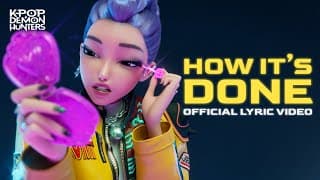
"How It's Done" Official Lyric Video | KPop Demon Hunters | Sony Animation
This song is a promotional track for the upcoming Sony Pictures Animation film, K-Pop: Demon Hunters. The film follows a world-renowned K-Pop girl group that balances their lives as global superstars with a secret identity as hunters of evil spirits. Here is an analysis of "How It's Done": ### 1. Overall Theme The song centers on mastery, confidence, and the duality of identity. It serves as a high-octane anthem that establishes the protagonists' dominance in two worlds: the competitive music industry and the dangerous realm of demon hunting. It highlights their professionalism, suggesting that whether they are performing on stage or slaying monsters, they do it with effortless style. ### 2. Key Lyrics Analysis * "Watch us do it with a smile": This line emphasizes the "Idol" persona. In K-Pop, maintaining a perfect image (the "smile") is essential, even when the work is grueling or—in this case—life-threatening. * "Class is in session, we’re the ones to teach ya": This establishes an authoritative tone. They aren't just participants in the game; they are the gold standard that others must follow. * "We got the rhythm, we got the light": This has a double meaning. "Rhythm" refers to their musical talent and choreography, while "Light" likely refers to the spiritual or magical energy they use to defeat dark spirits. * "Top of the charts / Winning your hearts": These lyrics reinforce their status as superstars, making it clear that their "day job" is just as successful as their secret mission. ### 3. Emotional Tone The tone is fierce, empowering, and energetic. It draws heavily from the "Girl Crush" concept common in modern K-Pop (like BLACKPINK or ITZY), which focuses on independence, "badassery," and self-assurance. It is designed to make the listener feel hyped and capable of tackling any challenge. ### 4. Cultural Context * The Hallyu Wave: The song is a direct response to the global explosion of K-Pop. It uses the genre's specific sonic signatures—heavy bass, catchy English-Korean hooks, and high-production synth-pop. * Modern Myth-Making: It blends traditional Korean folklore (demon hunting/spirits) with modern pop culture. This mirrors a trend in Korean media (like the drama *The Uncanny Counter*) where ordinary or famous people have supernatural duties. * Idol Culture: The lyrics reflect the intense training and "perfectionism" associated with K-Pop trainees, framing that discipline as a "superpower." ### 5. Artist Context Since this is a song by a fictional group created for a movie, its "career" context is world-building. Similar to how Riot Games created K/DA for *League of Legends*, Sony is using "How It's Done" to establish the musical identity and "vibe" of the characters before the movie is even released. It serves as a proof-of-concept that the film will treat the K-Pop element with authenticity while delivering a high-energy action spectacle.

INTRO. 권지용 (Middle Fingers-Up)
"INTRO. 권지용 (Middle Fingers-Up)" is the opening track of G-DRAGON’s 2017 self-titled EP, *Kwon Ji Yong*. It serves as a blunt, cynical re-introduction to the man behind the superstar persona. ### 1. Overall Theme The song is a defiant critique of the superficiality of fame and the exhaustion that comes with being a global icon. G-Dragon addresses the fake friends, social climbers, and the loss of privacy that define his life, ultimately choosing to dismiss the "noise" of the world with a middle finger. ### 2. Key Lyrics Analysis * "Peace minus one / Everyone, middle fingers up": This references his fashion brand, PEACEMINUSONE. He interprets "peace" as an ideal that is always missing something (the "minus one") in reality. By telling everyone to put their middle fingers up, he is inviting the listener to join him in rejecting societal expectations. * "I’m a small person / But my shadow is huge": A metaphor for the duality of his life. Kwon Ji Yong is just a man (the small person), but "G-DRAGON" is a massive, uncontrollable entity (the shadow) that follows him everywhere. * "Oh, I know Jiyong... We used to be close": In these verses, he mocks people who claim to be his friend to gain social status. He highlights the irony of strangers acting like they know his personal life when, in reality, he is increasingly isolated. * "Adults who don't act like adults": He expresses frustration with the industry veterans and seniors who lack integrity, suggesting that age does not necessarily command respect if it isn't earned. ### 3. Emotional Tone The tone is cynical, weary, and playfully aggressive. While the beat is upbeat and somewhat whimsical, the lyrics are biting. There is a sense of "fame fatigue"—he isn't bragging about his wealth; he is expressing how tired he is of the baggage that comes with it. ### 4. Cultural Context In South Korean society, there is a heavy emphasis on "Chem-myeon" (saving face) and extreme politeness toward seniors and the public. By titled a song "Middle Fingers-Up" and using profanity, G-Dragon intentionally breaks the "polite idol" mold. He also references the specific brand of social climbing prevalent in the Seoul nightlife and fashion scenes, where "knowing GD" is a form of social currency. ### 5. Artist Context This song marks a pivotal shift in G-Dragon’s career. Released just before his mandatory military enlistment, the *Kwon Ji Yong* album was his most personal work. While his previous hits like "One of a Kind" celebrated his status, "Middle Fingers-Up" strips away the glamour. It sets the stage for the rest of the album, which explores his loneliness and his struggle to reconcile his stage persona (G-DRAGON) with his true self (Kwon Ji Yong).
APT.
"APT." is a high-energy collaboration between BLACKPINK’s ROSÉ and Bruno Mars that has become a global sensation. Here is an analysis of the track: 1. Overall Theme The song is a playful, flirtatious anthem inspired by a popular Korean social game. It revolves around the excitement of a late-night romantic encounter and the direct, almost frantic energy of wanting to be with someone "face to face" rather than just communicating through a phone. 2. Key Lyrics Analysis * "Apateu, apateu": This repetitive hook is the Korean pronunciation of "apartment." It mimics the chant used in the "Apartment Game," a Korean drinking game, setting a rhythmic and addictive foundation for the track. * "Kissy face, kissy face / Sent to your phone but / I'm actually looking at you, girl": These lines by Bruno Mars highlight the transition from digital flirting to real-life chemistry, emphasizing the urgency of the physical meeting. * "Don't you want me like I want you, baby? / Don't you need me like I need you now?": This part of the chorus strips away the game-playing and expresses raw, pop-rock longing, shifting the tone from playful to passionately direct. * "Turn this 'apateu' into a club": This suggests transforming a private space into a scene of wild fun and celebration, blurring the lines between a casual hangout and a romantic party. 3. Emotional Tone The song is electric, fun, and nostalgic. It carries a "bratty-pop" and pop-punk energy reminiscent of the early 2000s (think Avril Lavigne or Toni Basil’s "Mickey"). It conveys a sense of uninhibited joy, youthful rebellion, and the "drunk-in-love" thrill of a night out. 4. Cultural Context The song is deeply rooted in Korean drinking culture. The "Apartment Game" (아파트 게임) involves players stacking their hands; a number is called, and whoever has their hand on that specific "floor" (number) must drink. By centering a global pop song around this specific social ritual, ROSÉ introduces a piece of Korean everyday life to the world, much like "Gangnam Style" did with its specific Seoul district, but with a more modern, "cool-girl" aesthetic. 5. Artist Context * ROSÉ: This serves as the lead single for her first studio album, *rosie*. It marks a significant stylistic shift from her more melancholic or polished solo work (like "On The Ground"), showcasing her versatility and her ability to lead a global "K-Pop-meets-West" crossover. * Bruno Mars: This continues his streak of high-profile collaborations (following his duet with Lady Gaga). It demonstrates his "chameleon" ability to fit into any genre—in this case, blending his retro-soul vocals with K-pop’s high-tempo energy—while further cementing his status as a global hitmaker.

Supernova Love
"Supernova Love" is a high-energy collaboration between the K-pop girl group IVE and the legendary French DJ David Guetta. Released as part of the "THE COLLAB X" project, the track blends K-pop’s melodic sensibilities with Western EDM production. Here is an analysis of the song: 1. Overall Theme The song centers on the overwhelming, explosive power of a romantic connection. Using the metaphor of a supernova—the brilliant and powerful explosion of a star—the track describes a love that is so intense it feels cosmic, transformative, and capable of lighting up the darkest parts of one's life. 2. Key Lyrics Analysis * "Like a supernova, love / Lighting up the dark": This is the central hook. It compares the sudden arrival of a romantic partner to a celestial event that provides light and energy, suggesting the relationship is a once-in-a-lifetime phenomenon. * "Everything you do is electric / Got me feeling like I’m magnetic": These lines emphasize the physical and chemical attraction between two people. It frames the relationship as something natural and inevitable, driven by a force (magnetism/electricity) they cannot control. * The "Merry Christmas, Mr. Lawrence" Sample: While not a lyric, the melodic motif throughout the song is a direct sample of the late Ryuichi Sakamoto’s iconic theme. This adds a layer of "melancholic beauty" to the song, contrasting the high-energy beats with a sense of nostalgic longing. 3. Emotional Tone The tone is euphoric, grand, and slightly nostalgic. David Guetta’s signature "future rave" production creates a sense of excitement and celebration, making it sound like a festival anthem. However, the delicate piano melody from the Sakamoto sample gives the song an emotional depth and a touch of elegance that sets it apart from typical club tracks. 4. Cultural Context The most significant cultural aspect of this song is the Ryuichi Sakamoto sample. By using the melody from *Merry Christmas, Mr. Lawrence*, the song pays homage to one of Asia's most influential composers. This choice bridges the gap between 1980s film music, Japanese heritage, and modern global pop, making the track feel familiar yet fresh to both Eastern and Western audiences. 5. Artist Context * For IVE: This track represents their continued push into the global market. While their previous hits (like "Love Dive" and "I AM") focused on the theme of "self-love" and "narcissism," "Supernova Love" sees them leaning into a more traditional romantic EDM sound, showcasing their versatility and vocal clarity alongside a world-class producer. * For David Guetta: The song follows his recent successful trend of sampling classic melodies (like Eiffel 65’s "Blue" or Haddaway’s "What Is Love") to create modern hits. By collaborating with IVE, he taps into the massive K-pop fanbase and reinforces his status as a bridge between underground dance music and mainstream pop stardom.

"Your Idol" | Official Song Clip | KPop Demon Hunters | Sony Animation
Based on the promotional clip released by Sony Pictures Animation for their upcoming feature (working title *K-Pop: Demon Hunters*), here is an analysis of the song "Your Idol." 1. Overall Theme The song explores the dual identity of the protagonists, who balance the high-pressure world of global superstardom with their secret lives as supernatural warriors. It serves as an anthem for empowerment, highlighting that their "perfection" as idols is mirrored by their lethal precision as demon hunters. 2. Key Lyrics Analysis * "I’m your idol, I’m your savior.": This line plays on the double meaning of the word "idol." In the music industry, they are objects of worship; in their secret lives, they are literal saviors protecting humanity from literal demons. * "Dancing in the neon, fighting in the dark.": This creates a sharp contrast between the bright, polished stage (the public eye) and the gritty, dangerous underworld where they perform their "real" work. * "Perfect timing, perfect pose.": This suggests that the discipline required for K-Pop choreography—where every movement must be synchronized—is the same discipline they use to execute combat maneuvers against monsters. 3. Emotional Tone The tone is high-energy, confident, and defiant. It blends the upbeat, infectious "earworm" quality of modern K-Pop with an aggressive, cinematic edge. There is a sense of "girl power" and bravado, conveying that the characters are fully in control of both their music and their weapons. 4. Cultural Context The song leans heavily into the Hallyu (Korean Wave) phenomenon. It references the rigorous standards of the K-Pop industry—visual perfection and synchronized performance—but subverts them by adding elements of Korean folklore and urban fantasy. By blending these elements, the song reflects how K-Pop has become a dominant global cultural force while paying homage to the supernatural tropes found in *Manhwa* (Korean comics) and anime. 5. Artist Context As this is a fictional group within a Sony Pictures Animation project, the "artist" is a collaborative effort between top-tier music producers and the studio’s creative team. * For Sony Animation: This song represents their continued push toward stylized, musically-driven storytelling following the success of *Spider-Man: Into the Spider-Verse*. * For the Movie: This track functions as the "mission statement" for the film, establishing the movie's unique aesthetic: a blend of high-fashion K-Pop visuals with intense, supernatural action.

5-7 (Music Video) Karan Aujla | Mxrci | Punjabi Songs 2026
Released in May 2024 (notably part of his consistent run of hits), "5-7" by Karan Aujla is a high-energy Punjabi track that blends traditional "swagger" with modern hip-hop sensibilities. Here is an analysis of the song: 1. Overall Theme The song is primarily a "flex" anthem centered around Karan Aujla’s physical stature and his massive influence in the music industry. The title "5-7" refers to his height (5 feet, 7 inches); the central theme is that while his physical height might be average, his status, reach, and "weight" in the world are unmatched. 2. Key Lyrics Analysis * "Panj-Satt kadd, kade vekh lavi hath ni": Aujla addresses his height (5'7") directly. He tells his critics or rivals that even with that height, they should look at the "reach of his hands" (his power/influence), implying he can reach heights others can’t. * Lifestyle Imagery: The lyrics frequently mention luxury cars (like the G-Wagon), high-end fashion, and the "Geetan di Machine" (Machine of Songs) persona. He emphasizes that he doesn't just talk about the lifestyle; he lives it. * Defiance to Rivals: He uses metaphors about lions and territory to explain that he doesn't need to shout to prove his dominance; his presence alone is enough to silence the competition. 3. Emotional Tone The tone is supremely confident, defiant, and celebratory. Mxrci’s production provides a heavy, rhythmic bassline that complements Aujla’s rhythmic flow, creating an atmosphere of "unbothered greatness." There is a sense of triumph—Aujla is no longer the underdog; he is the king of the hill, enjoying his success. 4. Cultural Context * Physicality vs. Stature: In Punjabi culture, "Kadd" (height/stature) is often a point of pride for a "Gabru" (young man). By naming the song after his height, Aujla subverts the traditional trope that a hero must be exceptionally tall, proving that talent and success define a man more than his physical dimensions. * Global Punjabi Wave: The song reflects the "Street Dreams" aesthetic—a fusion of Punjabi folk-style lyrics with global West Coast hip-hop beats, which has made Punjabi music a global phenomenon in recent years. 5. Artist Context Karan Aujla is currently at the pinnacle of his career. "5-7" serves as a follow-up to his massive success with the album *Making Memories* and his collaboration with Divine on *Street Dreams*. This song reinforces his partnership with producer Mxrci, a duo known for delivering "bangers" that dominate the charts and the club scene. It fits into his career as a "statement" track—asserting his dominance and reminding the industry that he is the most consistent hitmaker in the game. *Note: While the user mentioned "2026," the song was a major release in mid-2024.*